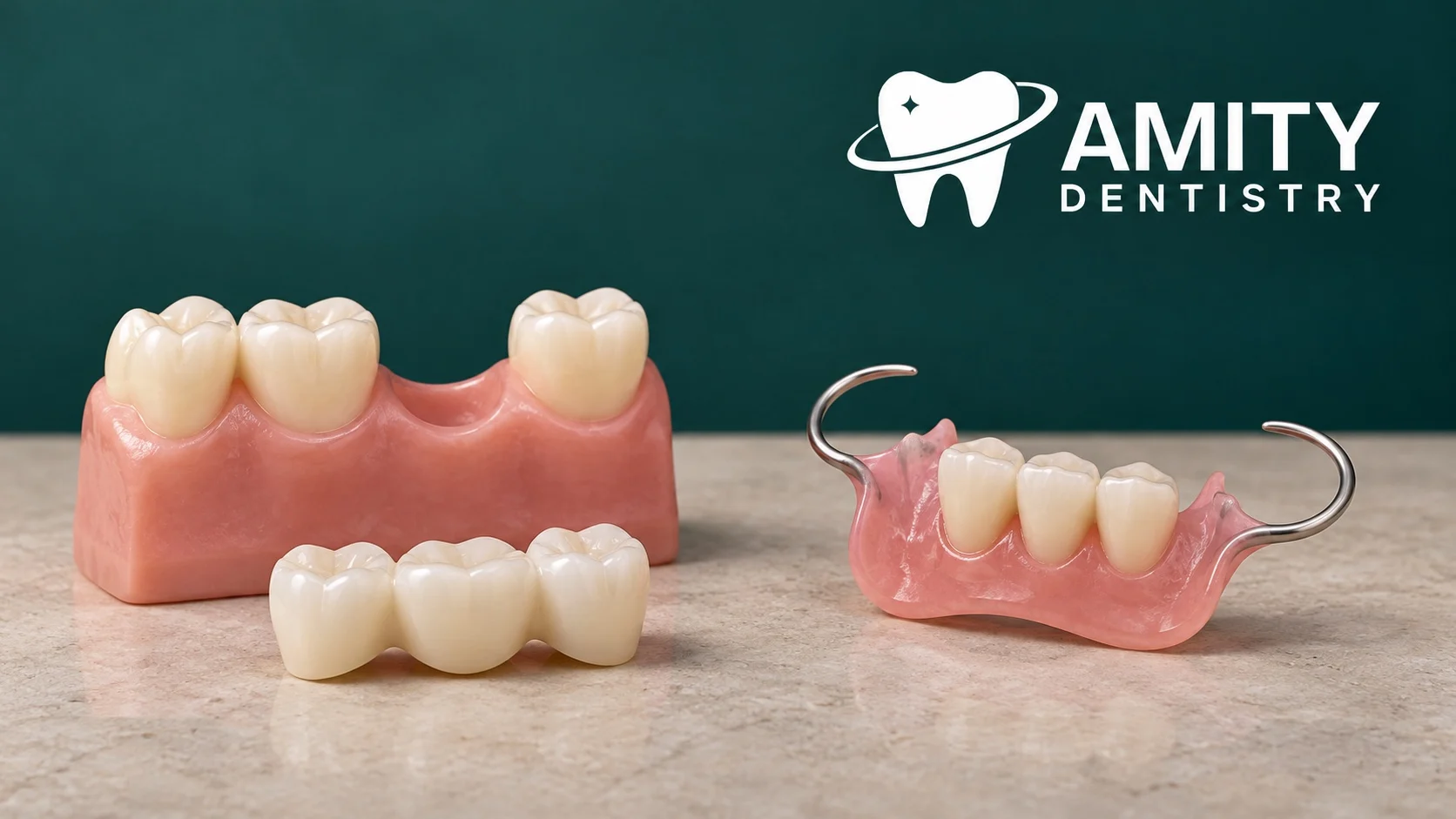
A tooth-supported fixed bridge stays in your mouth; a removable partial denture comes out for cleaning. Both can replace missing teeth, but the suitable choice depends on the gaps, the health of your remaining teeth and gums, and the routine you can manage. An examination and a comparison of the actual proposed plans are more useful than choosing by the treatment name alone.
First, be clear about what each name means
This guide compares a tooth-supported fixed bridge with a removable partial denture. A fixed bridge is sometimes called a fixed partial denture, which can make the names confusing. Ask the dental team to show you the specific design being recommended.
A complete denture replaces all the teeth in an upper or lower arch. A partial denture replaces missing teeth while some natural teeth remain. Those are different starting points for treatment planning.
What does a fixed bridge ask of the neighboring teeth?
A bridge holds replacement teeth in the gap and uses neighboring teeth for support. You leave it in place rather than taking it out at home. The American Dental Association’s bridge guidance explains why caring for the supporting teeth matters.
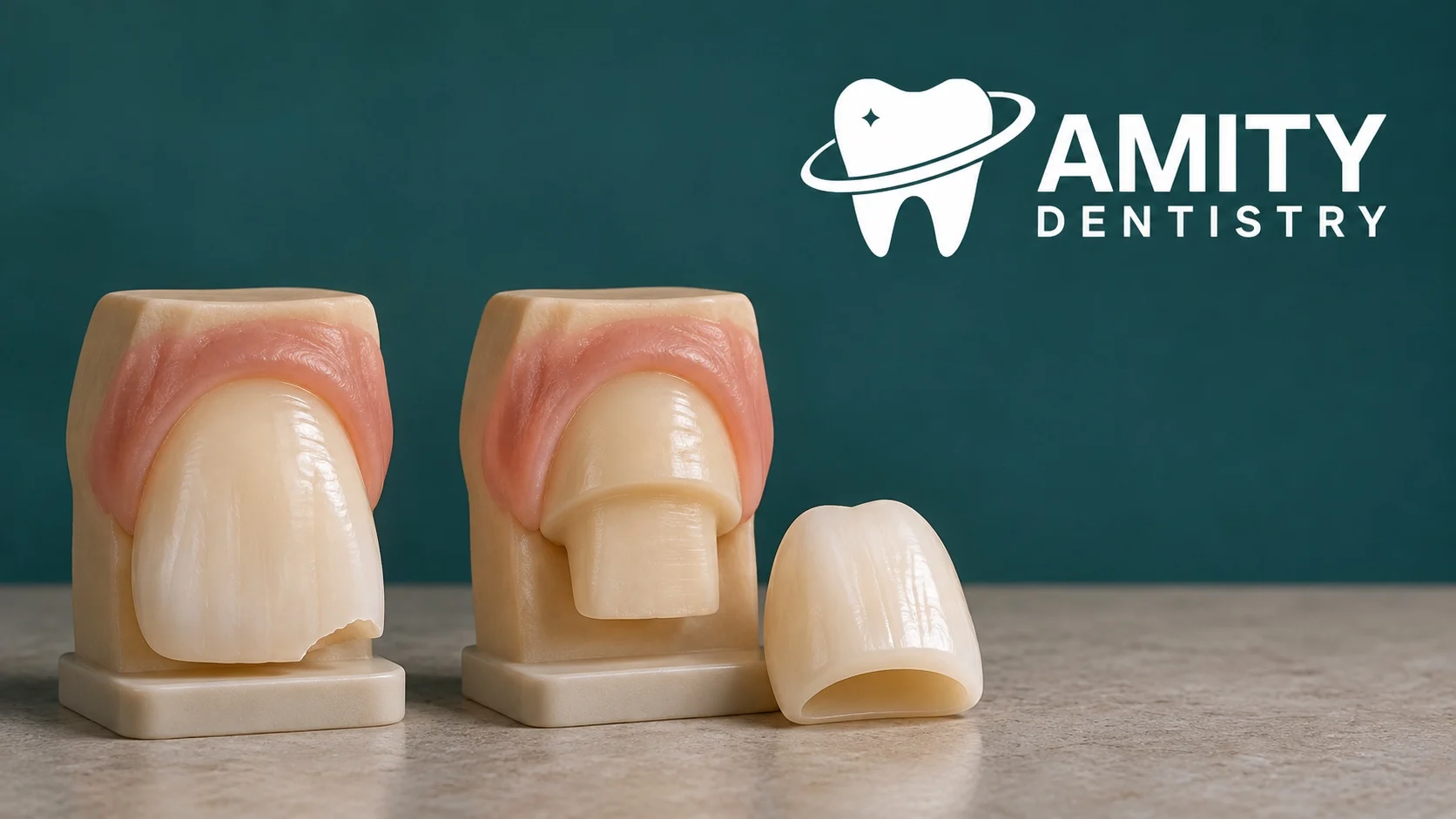
Ask which teeth would support your proposed bridge and whether the plan includes placing or replacing crowns. A crown covers a natural tooth, and the NHS explains that the tooth is shaped to fit it. If you already have a crown or a large filling nearby, tell the dentist; that history belongs in the assessment, but does not establish that a bridge is suitable.
A useful explanation should connect the proposal to your mouth: “These teeth would support the bridge, this is the work they need, and this is how you would clean around it.” Ask for a drawing or a demonstration if the plan is hard to picture.
How is a removable partial denture different?
A removable partial denture has replacement teeth on a base and may use clasps or other attachments to connect with remaining teeth. Its design depends on where the teeth are missing and the support available. It comes out for cleaning; it is not simply a bridge that you remove yourself.
The ADA’s partial-denture guidance describes an initial period of getting used to the appliance. Ask the team to demonstrate insertion and removal, then practice with their guidance. Do not force a partial into place by biting down.
Tell the dentist if taking an appliance in and out would be difficult for you. Explain concerns about handling it, cleaning it or remembering the routine. Those practical questions help make the discussion specific.
Compare the daily routines before comparing prices
With a fixed bridge: Ask how to clean the supporting teeth, around the bridge and beneath the replacement tooth. Have the team demonstrate the tools and technique for the particular bridge design. Staying in place does not mean the bridge needs no maintenance.
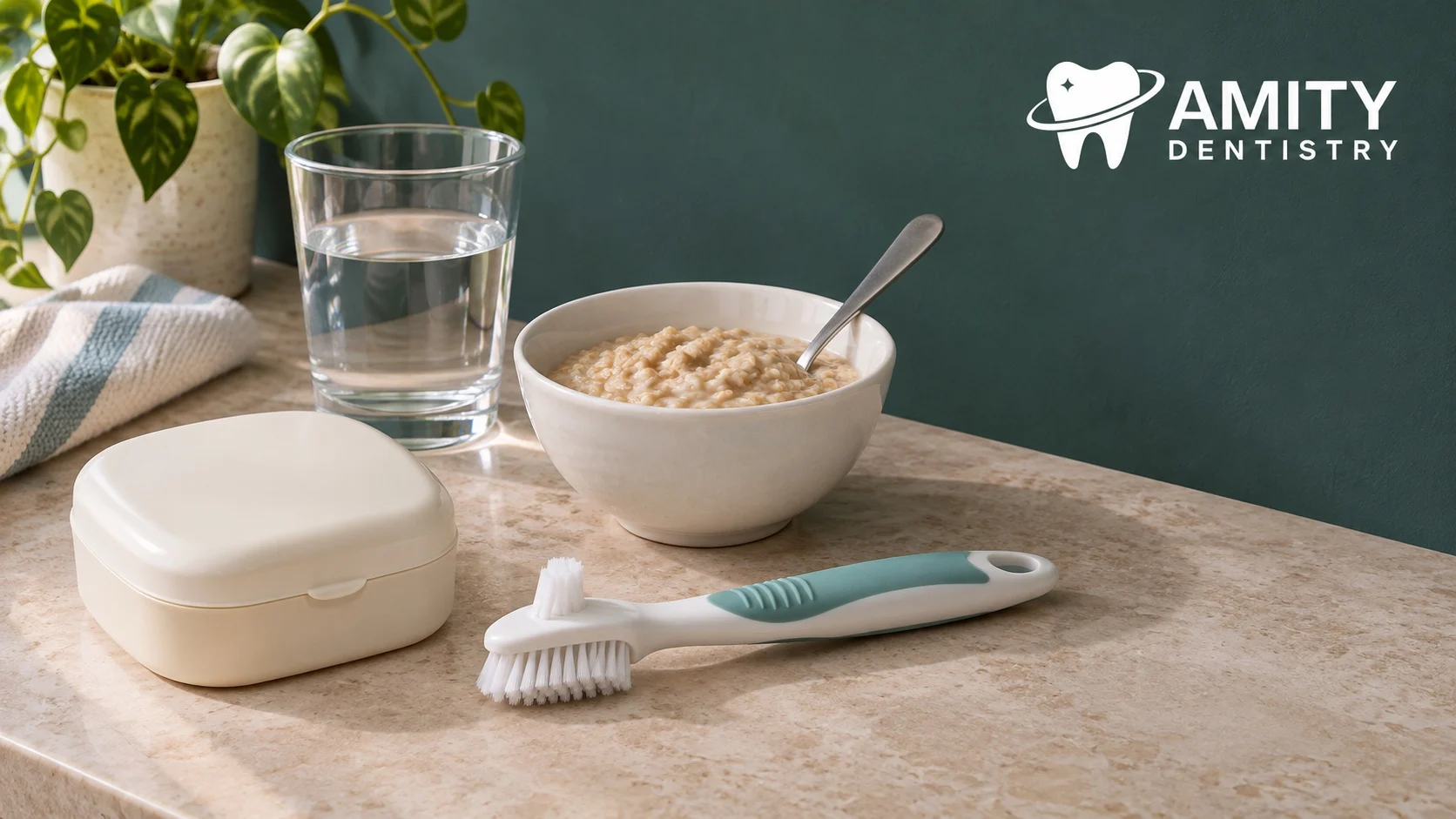
With a removable partial: Ask which brush and cleaning product suit the appliance, when to remove it, and how to store it. Natural teeth still need their own brushing and between-teeth cleaning. The ADA cautions that ordinary toothpaste can be too abrasive for a removable partial; follow the instructions for its materials.
For either option, ask what follow-up visits are planned and which changes should prompt a call. The NHS denture guide advises getting pain, damage or a slipping denture checked. Do not bend clasps, file an appliance or attempt a home repair to make it fit.
Ask for two clear plans, when both are suitable
There may be a clinical reason one option is recommended over the other. Start by asking what the examination showed, rather than assuming the choice is only about convenience or cost.
If both are reasonable options, ask:
- Which teeth would support each design, and what work would they need?
- How would I clean it and care for my remaining teeth?
- What visits, adjustments and follow-up are included?
- What would I do if it felt loose, sore or difficult to use?
- Can I have the proposed treatment and estimate in writing?
Have the team check your exact insurance plan separately from the clinical recommendation. Compare the proposed treatment, expected benefits and estimated amount you would pay. A general price comparison online cannot tell you what your individual plan includes.
Frequently asked questions
Is a partial denture the same thing as a bridge?
Not necessarily. “Fixed partial denture” can mean a bridge, while “removable partial denture” means an appliance you take out. Ask whether the proposed replacement is fixed or removable and which teeth it would involve.
Can a bridge be removed at home for cleaning?
No. A fixed bridge stays in place and is removed by a dentist if necessary. You still need to clean around it and care for its supporting teeth. Ask for a demonstration of the routine for your bridge.
Does a removable partial avoid all work on the remaining teeth?
Not necessarily. The ADA explains that crowns are sometimes needed to improve a partial’s fit, particularly with certain attachments. Ask what your proposed design requires. Your remaining natural teeth also need continuing home care and dental visits.
What if a new partial causes a sore spot or moves when I chew?
Contact the treating dental team and describe when it happens. A new appliance can feel unfamiliar, but pain or a slipping fit should be assessed. Do not force it into place, adjust its clasps or try to repair it at home.
Which option will cost less for me?
Request an itemized estimate for each option the dentist considers suitable. Check what the proposed treatment, visits and adjustments include, and have your exact insurance benefits checked. The appropriate clinical choice and your estimated payment are separate parts of the decision.
Discuss your missing-tooth options in South Charlotte
Amity Dentistry offers bridges and full and partial dentures. To request a restorative consultation at our Pineville-Matthews Road office in South Charlotte, call (980) 423-1244 or request an appointment. Tell the team about any current appliance and your main concerns; the team will confirm availability.
This article provides general education. A dentist recommends treatment after examining your individual teeth, gums and needs.
Related reading
- Do I Need a Filling or a Crown? How Dentists Decide
- When Is Tooth Extraction Necessary?
- Dental Cleanings: Why Regular Professional Care Matters
Sources
- American Dental Association, MouthHealthy: Bridges.
- American Dental Association, MouthHealthy: Dentures Partial.
- NHS: Dentures (false teeth).
- NHS: Dental treatments — bridge and crown explanations.