What is TMJ Disorder: Symptoms and Treatment Options
Short answer: TMD affects the jaw joints or chewing muscles. Persistent jaw pain needs assessment, and conservative care is usually considered before irreversible treatment. National Institute of Dental and Craniofacial Research.
Your jaw joint is one of the most complex joints in your body. It is called the temporomandibular joint, or TMJ. You have one on each side of your face, just in front of your ears. This joint connects your lower jawbone, the mandible, to your skull. It is responsible for the many movements you need for daily life. Talking, chewing, and yawning all depend on a healthy, functioning TMJ.
When this intricate system of muscles, ligaments, and bone works incorrectly, it can cause significant pain and discomfort. This group of conditions is known as a TMJ disorder, or TMD. A TMJ disorder can affect the joint itself or the muscles that control its movement. Jaw pain is a very common symptom, but the condition can also cause headaches, earaches, and other issues. Many people live with these symptoms without understanding their source.
Getting a proper diagnosis is the first step toward relief. TMJ disorder affects the complex joint connecting your jaw to your skull, causing pain and dysfunction that impacts daily activities like talking and chewing. This guide helps you understand the condition and find effective treatment.
You’ll learn about:
- Common symptoms: jaw pain, clicking or popping sounds, headaches, earaches, neck tension, and difficulty opening your mouth
- What causes TMJ problems: joint injury, muscle strain, teeth grinding (bruxism), and stress
- How dentists diagnose the condition: through physical examination, bite analysis, and imaging when needed
- Professional treatment options: self-care, physical therapy, and other individualized conservative options
If you’re experiencing persistent jaw pain or related symptoms, understanding TMJ disorder is the first step toward finding relief and restoring proper jaw function.
What is the Temporomandibular Joint?
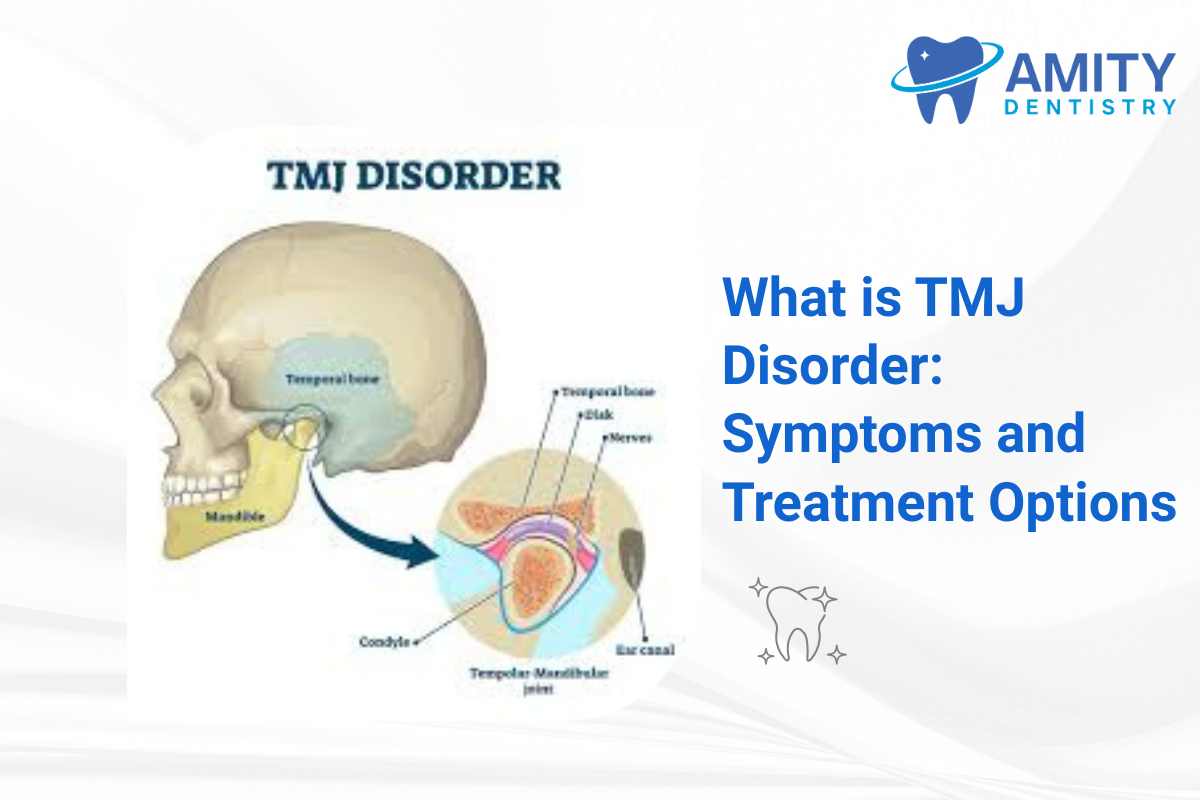
To understand a TMJ disorder, you first need to understand the joint itself. The temporomandibular joint is a sophisticated structure. It allows your jaw to move in multiple directions. It acts as a sliding hinge. This dual motion allows you to open and close your mouth and to move your jaw from side to side.
The main components of the joint are the condyle and the temporal bone. The condyle is the rounded end of your lower jaw. It fits into a socket in the temporal bone of your skull. Between these two bones is a small piece of cartilage called the articular disc. This disc acts as a shock absorber and a cushion. It allows the joint to move smoothly and without friction. When you open your mouth, the disc glides
forward with the condyle.
A complex group of muscles surrounds and supports the TMJ. These muscles control all the movements of your jaw. They are responsible for the powerful forces needed for chewing. A TMJ disorder occurs when any part of this system, the bones, the disc, or the muscles, is not working correctly. The term TMD is a broad label for a variety of problems that cause pain and dysfunction in this area. The goal
of TMJ treatment is to identify the source of the dysfunction and restore harmony to the system.
Common Symptoms of TMJ Disorder
A TMJ disorder presents a wide range of symptoms. These symptoms can be confusing because they often appear in areas other than the jaw. This is why the condition is sometimes misdiagnosed. Recognizing the full spectrum of symptoms is important for getting the right help.
The most direct symptoms relate to the jaw itself. Persistent jaw pain or tenderness is the most common complaint. This pain is usually located in the area just in front of the ear. It may affect one or both sides of your face. You might feel a dull, aching pain that worsens with jaw movement. Chewing food can become difficult or painful. In some cases, the jaw joint can lock. This makes it hard to fully open or close your mouth. This locking can be temporary or may require manual manipulation of the jaw to resolve.
Sounds coming from the jaw joint are also a very common sign. You might hear a clicking, popping, or grating sound when you open your mouth or chew. It is important to note that jaw sounds without any associated pain or limited movement are not always a sign of a TMJ disorder. Many people have jaw sounds with no other issues. When these sounds are accompanied by pain, however, it usually indicates a
problem with the position of the articular disc.
A TMJ disorder often causes referred pain. This is pain that is felt in a location other than its source. Frequent headaches, especially those that feel like tension headaches, are a common symptom. The constant strain in the jaw muscles can radiate to the muscles in the temples and forehead. You may also experience neck and shoulder pain. The muscles of the jaw and neck are interconnected, so tension
in one area can easily spread to the other. Earaches, a feeling of fullness in the ears, and tinnitus, or ringing in the ears, are also linked to TMJ issues. Other symptoms include a tired feeling in the face or the sensation that your upper and lower teeth do not fit together correctly.
What Causes TMJ Disorder?
The exact cause of a person’s TMJ disorder can be difficult to pinpoint. In most cases, the problem is the result of several contributing factors rather than a single cause. These factors can relate to the joint itself, the surrounding muscles, or the alignment of your teeth.
Problems directly within the joint are a common source of TMD. The articular disc can move out of its proper alignment or erode over time. This reduces the joint’s cushioning and causes the bones to grind against each other. The cartilage within the joint can also be damaged by arthritis. Both osteoarthritis and rheumatoid arthritis can affect the temporomandibular joint, leading to inflammation and degeneration. A direct injury to the jaw, such as from an impact or accident, can also damage the joint and lead to long-term problems.
Muscle issues are another major contributor to TMJ disorder. Myofascial pain, which is pain in the muscles and their connective tissues, is very common. The primary cause of this muscle strain is often bruxism. Bruxism is the medical term for the chronic, involuntary grinding or clenching of teeth. Many people do this in their sleep without being aware of it. This habit places an enormous amount of force on
the jaw muscles and the TMJ. This leads to muscle fatigue, inflammation, and pain.
Stress and jaw clenching can contribute to discomfort. The cause of TMD is often uncertain, and research does not establish a bad bite as its cause.
How a Dentist Diagnoses TMJ Disorder
If you are experiencing jaw pain or other related symptoms, a dentist with experience in TMJ treatment is the right professional to see. The diagnostic process is thorough. It is designed to identify the specific source of your problem.
Your appointment will begin with a detailed discussion of your symptoms. Your dentist in Charlotte NC will ask you about the location, frequency, and intensity of your pain. They will ask about any jaw sounds you hear and any difficulty you have with jaw function. They will also discuss your medical history and lifestyle factors. This includes asking about your stress levels, sleep habits, and any potential injuries.
This conversation provides important clues about the potential causes of your condition.
Next, your dentist will conduct a physical examination of your jaw and head. They will ask you to open and close your mouth and move your jaw from side to side. During these movements, they will observe your jaw’s range of motion. They will listen for any clicking or grating sounds. The dentist will then gently press on different areas of your face, jaw, and neck. This is done to identify specific points of pain or tenderness in the muscles and around the joint itself.
Your dentist will also perform a bite analysis. They will look at how your upper and lower teeth fit together. They will check for signs of wear on your teeth, which is a strong indicator of bruxism. In some cases, imaging may be needed to get a more detailed view of the joint. A panoramic X-ray can show the bony structures of the jaw. For a more detailed look at the soft tissues, including the articular disc, a CT
scan or an MRI might be recommended.
Professional TMD Treatment Options
Treatment depends on the diagnosis. A clinician may discuss habit changes, physical therapy, or other conservative options before considering invasive procedures. Ask what benefit is expected, how progress will be assessed, and when the plan should be reviewed.
A night guard can protect teeth from grinding, but relief of TMD pain is uncertain. An appliance should not permanently alter the bite. Stop using it and contact the treating clinician if it causes pain.
Grinding teeth down, placing crowns, or using orthodontics solely to treat TMD lacks supporting evidence and may worsen symptoms. Discuss alternatives and consider a specialist opinion before irreversible treatment. NIDCR explains the evidence and treatment limitations.
Conclusion
You do not need to endure the persistent discomfort of a TMJ disorder. The chronic jaw pain, headaches, and other symptoms associated with this condition are treatable. Ignoring the problem can lead to worsening pain and further damage to your jaw joint and teeth. The correct path to relief starts with a proper diagnosis from a dental professional. Your dentist can help identify the underlying causes of your condition.
Discuss persistent jaw pain with a dentist or doctor. An assessment can help distinguish TMD from other causes and identify appropriate next steps.
You do not have to live with chronic jaw pain. At Amity Dentistry, you can discuss jaw pain, grinding or bite concerns with the dental team. Ask what assessment and care are currently available and whether a referral is appropriate. Want a trusted Charlotte dentist for your smile? Schedule your appointment at (980) 423-1244 and Book Now without delay.
Related reading from Amity Dentistry
- Night Guards in Pineville: When Teeth Grinding Becomes a Serious Issue
- Why Does a Tooth Hurt When You Bite Down?
- Signs You Need Dental Surgery: Key Symptoms to Watch
Clinical content reviewed by Dr. Arati Shrestha, DMD on .
Sources
- National Institute of Dental and Craniofacial Research: TMD (Temporomandibular Disorders)
- National Institute of Dental and Craniofacial Research: Bruxism
Related help for jaw pain and TMJ symptoms
Jaw pain, headaches, and bite strain often overlap with other dental concerns. These pages can help you understand when to schedule an exam and what care may be recommended.
Recommended pages
- Restorative dentistry — Learn how bite problems, worn teeth, and tooth damage can affect jaw comfort and function.
- Emergency dental care — Use this page when jaw pain or facial pain becomes urgent or severe.
- Dental FAQs — Review answers to common patient questions before your appointment.
- Discuss jaw concerns with the office — Contact the team to discuss jaw concerns, confirm the care currently available and ask whether a referral is appropriate.
Quick answers
When should I see a dentist for TMJ symptoms?
You should schedule an exam if jaw pain lasts more than a few days, chewing feels uncomfortable, your jaw clicks with pain, or your mouth starts locking or opening unevenly.
Can teeth grinding make TMJ pain worse?
Yes. Grinding and clenching can overload the jaw joints and muscles, which often makes TMJ pain, headaches, and tooth wear worse over time.
What treatments can help with TMJ discomfort?
Treatment may include a bite evaluation, a custom night guard or splint, adjustments to reduce strain, and a plan to address habits that keep overloading the jaw.
FAQs
Can TMJ disorder go away on its own?
Some TMD symptoms improve without treatment. Persistent pain, locking, or limited movement should be assessed by a dentist or doctor.
Is a clicking jaw always a sign of TMJ disorder?
No. A clicking or popping sound in the jaw without any associated pain or limitation
in movement is common. It is not always a sign of a problem. When the sound is
accompanied by pain, it is a strong indicator of a TMJ disorder that should be
evaluated.
How does a custom night guard differ from an over-the-counter guard?
A custom guard is made to fit your teeth and protect them from grinding. Fit and material differ among products. A guard should not permanently change your bite; ask your clinician whether one is appropriate for you.
Can stress alone cause TMJ pain?
Stress is a major contributing factor to TMJ pain. It often leads to unconscious
muscle tightening and teeth clenching. While it may not be the sole cause, managing
stress is a very important part of managing TMJ disorder symptoms.
Are the treatments for TMJ disorder painful?
Treatment experiences vary. Discuss the benefits, risks, and comfort measures for each option with your clinician. Conservative approaches are usually considered first.